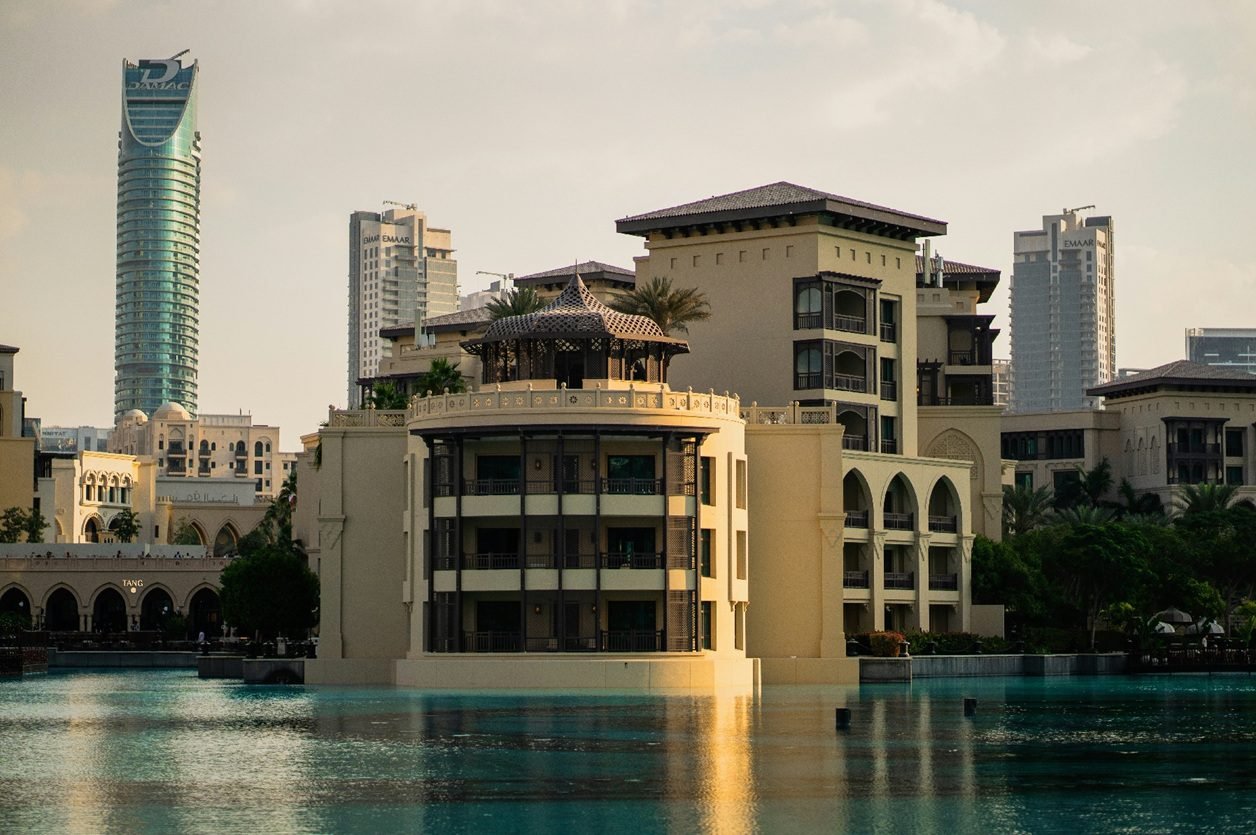
Why real estate investment in Dubai still attracts global capital
Real estate investment in Dubai continues to attract international investors in 2026—but not for the simplistic reasons often repeated online. The market’s appeal lies in its structure: liquidity, regulatory clarity, and the ability to combine income, capital exposure, and optional relocation within one jurisdiction.
This guide reframes Dubai real estate investment as a strategic decision rather than a location-based impulse, explaining what actually matters for investors today.
What makes Dubai structurally attractive to investors
Dubai’s appeal is not about short-term gains; it is about market mechanics.
Key structural factors include:
- No annual property tax on ownership
- Clear registration and title systems
- High transaction liquidity relative to regional peers
- Strong demand from residents, businesses, and international capital
- Legal ownership frameworks for foreign investors in designated areas
These features reduce friction—but they do not eliminate risk.
Property types in Dubai and how they behave differently
Dubai does not offer a single investment profile. Different property types serve different strategies.
Apartments:
- Often favoured for rental-led strategies
- Sensitive to service charges and supply timing
- Exit liquidity varies by unit size and location
Villas and townhouses:
- Typically attract end-users
- Lower transaction frequency
- More sensitive to price cycles
Commercial properties:
- Driven by business demand
- Lease structure and tenant quality matter
- Smaller buyer pool at exit
Understanding behaviour matters more than chasing labels.
Location matters—but not in the way most guides suggest
“Best areas” change depending on objective.
Rather than ranking neighbourhoods, investors should ask:
- Who rents or buys here?
- How deep is demand at my price point?
- How much competing supply is coming?
- How easy is resale within this segment?
Location should serve strategy, not trend-following.
The investment process: what disciplined investors actually do
A structured approach reduces downside risk.
A practical sequence:
- Define the objective (yield, growth, residency, diversification)
- Choose the property segment that fits that objective
- Model true ownership costs
- Validate demand depth and exit liquidity
- Execute within the legal framework
Skipping steps usually shows up later—at exit.
Costs that shape real returns
Purchase price alone does not determine performance.
Key costs to model:
- Transfer and registration fees
- Service charges
- Maintenance and vacancy
- Financing costs, if applicable
Costs directly affect yield and resale attractiveness.
Freehold ownership and foreign investors
Foreign investors can legally own property in Dubai—but only within defined frameworks.
Key points:
- Ownership is limited to designated freehold areas
- Title deeds define actual rights
- Ownership does not automatically grant residency
Understanding structure avoids false assumptions.
Common mistakes first-time investors make
- Treating Dubai as one uniform market
- Relying on gross yield figures
- Ignoring service charge impact
- Buying without an exit plan
- Confusing marketing narratives with data
These errors are avoidable with preparation.
Conclusion
Real estate investment in Dubai works best when treated as a system—not a shortcut. Market structure, ownership rules, costs, and exit planning determine outcomes far more than location lists or headline returns. In 2026, informed strategy remains the real advantage.
FAQ
Is real estate investment in Dubai still attractive in 2026?
Yes, when approached strategically and with realistic assumptions.
Can foreign investors legally buy property in Dubai?
Yes, in designated freehold areas under UAE law.
Are rental yields guaranteed?
No. Yield depends on costs, demand, and vacancy.
Is Dubai suitable for long-term investors?
Yes, particularly for investors prioritising liquidity and regulatory clarity.
Does buying property guarantee residency?
No. Residency requires a separate eligibility process.