Why are apartments so cheap in Dubai? This question comes up constantly—especially when buyers compare Dubai prices to other global cities. The short answer is that some apartments are cheap, some are not, and price alone tells you very little about value.
Dubai’s apartment market is shaped by supply timing, building quality, operating costs, and exit liquidity. Lower prices are often rational signals—not hidden opportunities. This article explains what those price gaps actually mean and how investors interpret them.
“Cheap” compared to what?
Dubai often looks inexpensive when compared to cities with:
- Severe land constraints
- Slow construction cycles
- Heavy property taxation
- Rent controls or ownership limits
Dubai operates differently. Land is planned at scale, construction is fast, and ownership structures are open to international buyers. That combination keeps headline prices lower—but it also creates wide quality dispersion.
Why Are Apartments So Cheap in Dubai Compared to Other Global Cities?
Many international buyers wonder why Apartments So Cheap in Dubai when compared with property prices in cities like London, New York, or Hong Kong. The explanation usually lies in structural market factors rather than hidden discounts. Dubai builds at scale, allows foreign ownership in designated areas, and releases new supply faster than many mature markets. As a result, price gaps often reflect differences in supply dynamics, building quality, and operating costs rather than simple undervaluation. Understanding these structural drivers helps investors interpret lower prices more accurately.
The biggest reason: supply is not uniform
Dubai does not suffer from chronic undersupply across all segments. Instead, it experiences waves of supply, concentrated in specific areas and price bands.
What this creates:
- Strong competition between similar apartments
- Price pressure in buildings with weaker differentiation
- Clear winners and losers inside the same neighbourhood
Apartments that are “cheap” are often in the most competitive slice of supply.
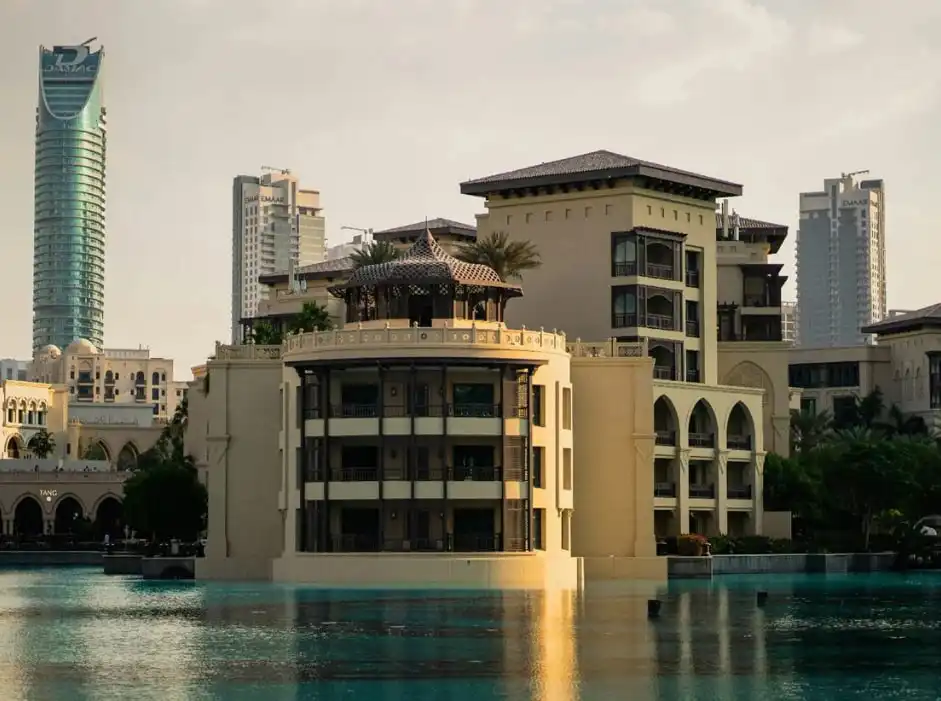
Image guidance
Caption: Supply shapes pricing
Alt text: why are apartments so cheap in Dubai showing dense residential towers and supply concentration
Image note: Export WebP, compress under 200KB
Service charges quietly explain many low prices
One of the least understood reasons apartments appear cheap is service charges.
High or rising service charges:
- Reduce net rental income
- Lower buyer appetite on resale
- Force sellers to discount prices
An apartment priced below market often compensates for higher long-term costs, not hidden value.
This is why investors always compare price + annual charges, not price alone.
Building quality creates price dispersion
Two apartments with identical layouts can trade at very different prices because of:
- Maintenance standards
- Lift performance and common areas
- Management discipline
- Owner-occupier vs tenant mix
Lower-quality buildings usually clear at lower prices—not because the market is inefficient, but because buyers price in future friction.
“Cheap” often means liquidity risk
Lower prices frequently signal resale friction.
Common liquidity issues:
- Many identical units competing at resale
- Limited end-user demand at that price point
- Investors selling to investors (thin buyer pool)
Cheap assets are only attractive if someone else wants them later. Price without liquidity is not value.
When cheap is an opportunity
Not all low prices are bad.
Cheap can work when:
- Service charges are genuinely efficient
- The building has stable tenant demand
- The price gap reflects temporary seller pressure
- Exit buyers exist at the same price band
This is why investors hunt mispriced assets, not “cheap” ones.
Ordered checklist: how investors read price gaps
- Compare price against service charges
- Check supply concentration in the building
- Assess tenant demand depth
- Identify the likely exit buyer
- Model net returns conservatively
If a price gap still exists after this process, it may be real value.
What cheap never replaces
Cheap does not replace:
- Due diligence
- Demand analysis
- Cost modelling
- Exit planning
In Dubai, low prices usually explain something. Your job is to figure out what.
Conclusion
Apartments in Dubai look cheap because the market prices costs, competition, and liquidity quickly. Low prices are usually signals—not gifts. Investors who understand what those signals mean can find value. Those who chase cheap often inherit problems.
FAQ
Why are apartments cheaper in Dubai than other cities?
Because supply is planned at scale, ownership is open, and the market prices costs and liquidity efficiently.
Does cheap mean bad quality?
Often—but not always. It usually reflects higher costs, weaker demand, or resale friction.
Can cheap apartments still be good investments?
Yes, if net costs are low and exit demand exists at the same price level.
Do service charges affect apartment prices?
Yes. Higher service charges often force lower resale prices.
Should investors chase the lowest price?
No. Investors chase value after costs, demand, and exit—not price alone.